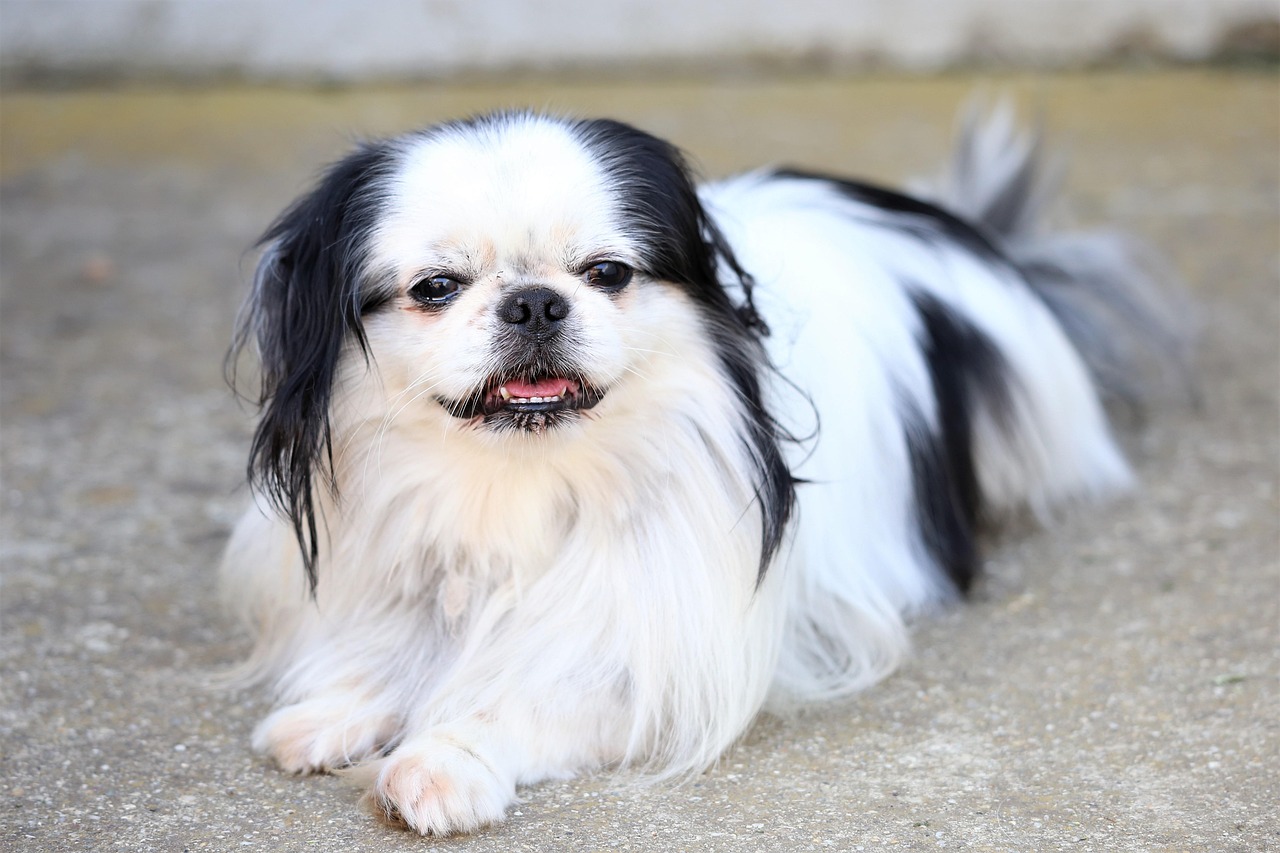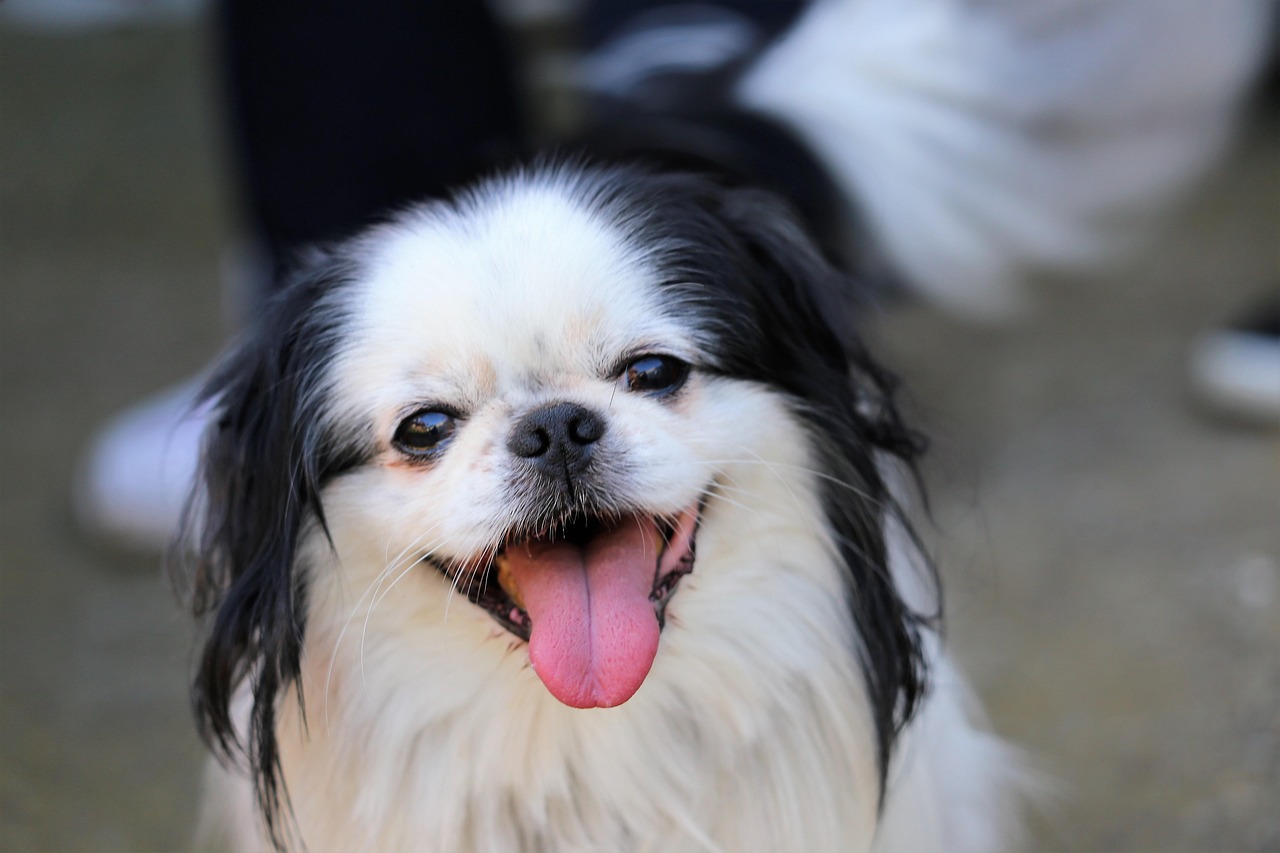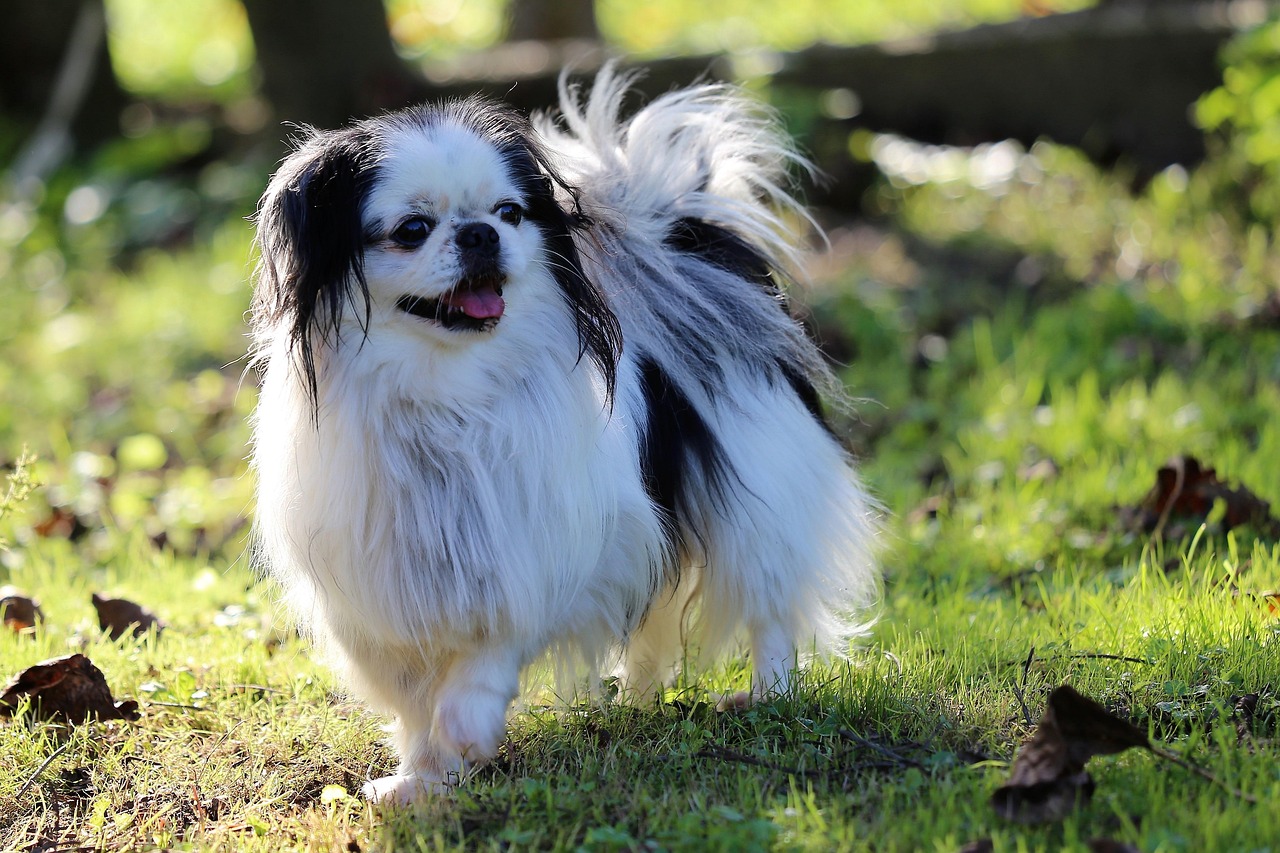
Japanese Chin
Elegant, Affectionate, Intelligent, Graceful, Loyal, Cat-like, Royal Toy Dog
The Japanese Chin is a small companion dog with a calm, elegant presence. They love being close to their people, enjoy gentle play, and are just as happy relaxing in a cozy spot. Many Chin owners describe them as cat-like because they are tidy, observant, and surprisingly agile.
Popular Japanese Chin Comparisons
Not sure which breed fits your lifestyle?
Answer a few quick questions to discover dog breeds that fit your lifestyle.
Know your Japanese Chin
Breed Group: Toy
Size: Small
Height: 8-11 inches
Weight: 4-9 pounds
Coat Type: Long, Silky, Feathered; flows elegantly over the body with a prominent neck frill and plume-like tail
Coat Colors: Black & White, Red & White, Lemon & White, with symmetrical facial markings preferred
Temperament: Gentle, intelligent, and quietly playful. Japanese Chins tend to be very attached to their people, but they are not usually demanding. They like calm routines, soft attention, and short bursts of fun, then they settle back down. They are sensitive dogs, so they do best with a patient, kind approach and a peaceful home environment.
Energy Level: Moderate; enjoys short play sessions and lounging near loved ones
Good with Children: Yes
Good with Other Pets: Yes
Trainability: High (responsive and bright, though may act independently—responds best to soft, positive methods)
Barking Tendency: Low (usually quiet and composed, but will alert when necessary)
Lifespan: 12-14 years
Health Issues: Heart Problems (mitral valve disease), Eye Disorders (corneal ulcers, cataracts), Respiratory Issues due to short muzzle, Patellar Luxation, Sensitivity to anesthesia
Exercise Requirements: Low to Moderate; enjoys short daily walks, indoor playtime, and interactive games but tires quickly
Hypoallergenic: No
History: The Japanese Chin is a breed steeped in regal tradition and refinement. Although its name associates it with Japan, the breed is believed to have originated in ancient China or Korea and was presented as a treasured gift to Japanese nobility. There, it was elevated to royal status—prized by the Imperial family and meticulously bred for centuries as a lap dog of leisure. Revered for its cat-like behavior, including self-grooming and agile leaps, the Chin’s charm captivated both Eastern and Western aristocracy. Introduced to Europe in the 1800s and later to America, the Japanese Chin continues to be adored today as a graceful, intelligent, and affectionate companion that thrives in calm households with loving human interaction.